Speech & Communication Therapy
Speech & Communication Therapy — Finding Every Child’s Voice
Communication is the foundation of connection, learning, and self-expression. At Beyond Barriers, our speech and communication therapy program helps children find their voice — whether through spoken words, gestures, or alternative communication tools. We work closely with parents, providing guidance, regular feedback, and practical strategies so progress continues at home.
Understanding Speech Therapy
What Does Speech & Communication Therapy Cover?
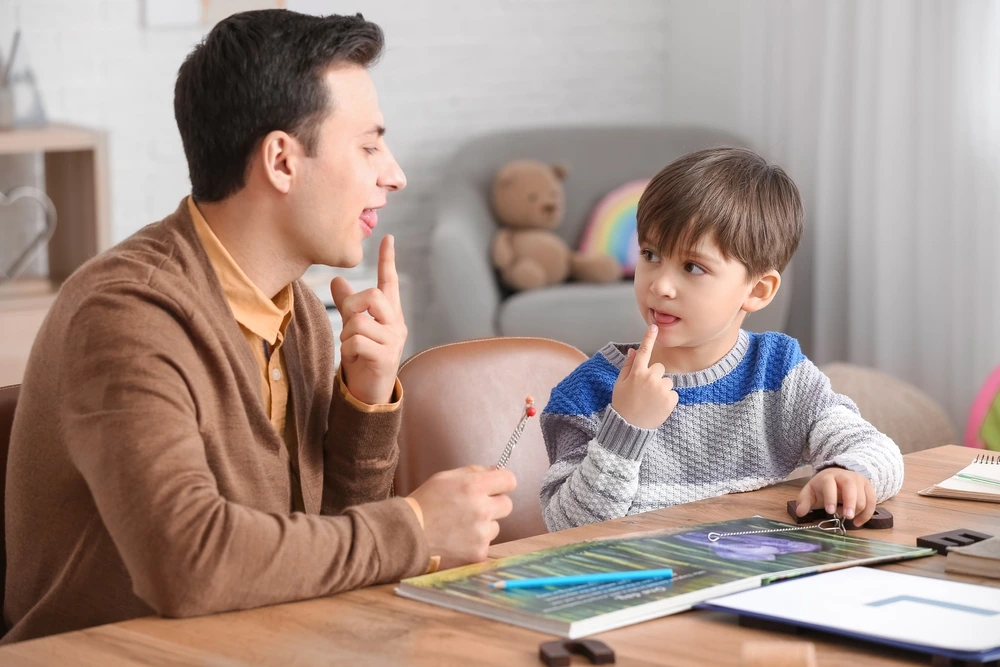
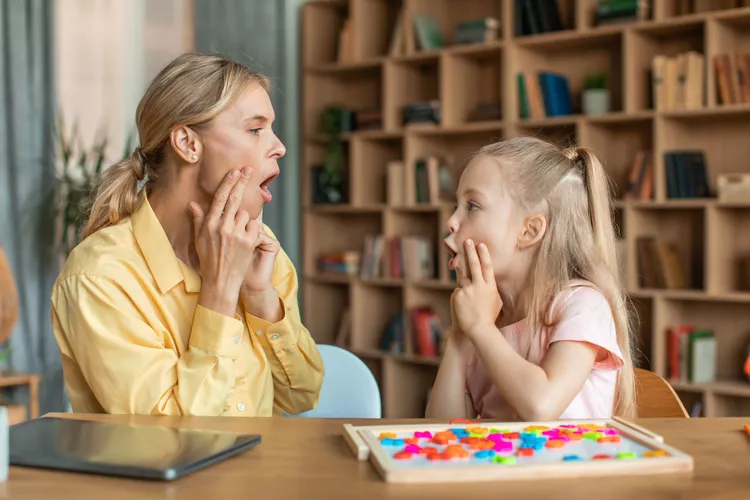
Speech and communication therapy addresses a wide spectrum of challenges that affect how children understand and express language. Our licensed speech-language pathologists work with children experiencing difficulties in articulation (how sounds are produced), phonology (sound patterns), fluency (stuttering and rhythm of speech), voice quality, and both receptive language (understanding what is said) and expressive language (putting thoughts into words).
We also specialize in pragmatic language — the social use of communication, including taking turns in conversation, understanding body language, and adjusting speech for different situations. In Bangladesh’s bilingual context, where children often navigate both Bengali and English, our therapists are sensitive to the unique challenges this presents. We ensure that therapy supports communication growth across all languages your child uses.
Communication is not just about talking — it touches every aspect of a child’s development. A child who struggles to communicate may experience frustration, behavioral challenges, social isolation, and academic difficulties. At Beyond Barriers, we recognize the far-reaching impact of communication and work holistically to empower every child to connect, express, and thrive.
Signs Your Child May Need Speech Therapy
Every child develops at their own pace, but certain signs may indicate that your child could benefit from professional support. Trust your instincts — if something feels off, it is always better to seek guidance early. Here are some common signs to watch for.
📖
Limited Vocabulary
Your child uses significantly fewer words than expected for their age, is slow to learn new words, or relies heavily on gestures and pointing rather than speaking to communicate their needs.
🗣️
Unclear Speech
Family members or caregivers frequently have difficulty understanding what your child is saying, or your child’s speech is much harder to understand compared to other children of the same age.
🔄
Stuttering / Fluency Issues
Repeating sounds, syllables, or words, prolonging sounds, or experiencing blocks where no sound comes out. Your child may also show visible tension or frustration when trying to speak.
👂
Difficulty Following Directions
Your child struggles to understand and follow simple or multi-step instructions, seems confused by questions, or frequently needs directions to be repeated multiple times.
🤝
Trouble with Social Communication
Difficulty making eye contact, taking turns in conversation, understanding jokes or sarcasm, reading body language, or maintaining a topic of conversation with peers and adults.
💬
Not Speaking in Sentences
By age 2-3, children typically begin combining words into phrases and short sentences. If your child primarily communicates using single words or does not form sentences by age 3, professional guidance may help.
📝
Difficulty with Reading & Writing
Struggling to recognize letters, connect sounds to letters, decode words, or express ideas in writing. Speech-language difficulties often have a direct impact on literacy development and academic performance.
🤫
Limited Verbal Expression
Your child can understand what others say but struggles to express their own thoughts, feelings, and ideas verbally. They may become frustrated, withdraw, or use behaviors to communicate instead of words.
Our Approach to Speech & Communication Therapy
Our speech-language pathologists use a combination of internationally recognized, evidence-based methods, carefully selecting the right approach for each child’s unique communication profile and learning style.
Hanen Program
PROMPT
AAC (Augmentative & Alternative Communication)
Play-Based Therapy
Parent Coaching
PECS
Individualized Communication Plans
Every child’s communication journey is different. We develop personalized therapy plans based on thorough assessment, targeting the specific areas where your child needs the most support while building on existing strengths.
Bilingual-Sensitive Approach
Growing up bilingual in Bengali and English is a strength. Our therapists understand the nuances of bilingual language development and ensure therapy supports your child’s communication across all languages used at home and school.
Parent as Communication Partner
Parents are the most important communication partners in a child’s life. We work closely with parents, providing guidance, regular feedback, and practical strategies so progress continues at home through everyday conversations, play, and routines.
Naturalistic & Play-Based Methods
Children learn communication best in meaningful, engaging contexts. Our therapists use play, stories, songs, and real-life situations to create natural opportunities for your child to practice and develop their communication skills with confidence.
What to Expect at Beyond Barriers
Your child’s communication journey begins with understanding, compassion, and a clear plan. Here is how the process unfolds at our center.
1
Parent Interview & History
We start by listening carefully to your story. Our therapist will ask about your child’s developmental history, communication habits at home and school, languages spoken, and your specific concerns and hopes.
2
Speech-Language Assessment
Our therapist evaluates your child’s articulation, language comprehension, expressive abilities, fluency, voice quality, and social communication skills using standardized and observational assessments in a relaxed environment.
3
Tailored Therapy Plan
We create a customized plan with clear communication goals, recommended session frequency, chosen therapy methods, and home practice activities — all designed around your child’s needs and your family’s daily life.
4
Ongoing Therapy & Review
Regular therapy sessions begin with continuous monitoring. We review progress every 6-8 weeks, share updates with parents, and adjust goals and strategies as your child’s communication abilities blossom and grow.
Frequently Asked Questions
We know navigating speech and communication concerns can feel overwhelming. Here are answers to common questions parents ask us. Please feel free to reach out if you need any additional clarification.
When should I worry about my child’s speech development?
While every child develops at their own pace, there are certain milestones to watch for. If your child is not babbling by 12 months, not using any words by 18 months, not combining two words by age 2, or if their speech is largely unintelligible to familiar listeners by age 3, it is a good idea to consult with a speech-language pathologist. Trust your instincts — you know your child best. Early assessment does not commit you to anything, but it can provide valuable peace of mind or early intervention that makes a real difference.
My child speaks both Bengali and English. Could bilingualism cause speech delays?
No. Research consistently shows that bilingualism does not cause speech or language delays. Bilingual children may mix languages as they sort out their linguistic systems, and this is completely normal and actually a sign of healthy language development. However, a true speech or language disorder will show up in all languages a child speaks. Our therapists are experienced in distinguishing typical bilingual development from genuine communication concerns, and we celebrate multilingualism as a wonderful cognitive advantage for your child.
How long will my child need speech therapy?
The duration of speech therapy varies widely depending on the nature and severity of your child’s communication challenges. Some children with mild articulation issues may need only a few months of therapy, while children with more complex language disorders or conditions like autism may benefit from ongoing support over a longer period. Our therapists set clear, measurable goals and regularly review progress so you always know where your child stands. We never continue therapy longer than necessary — our goal is to help your child become an independent, confident communicator.
What can I do at home to support my child’s communication?
There is so much you can do as a parent. Talk to your child throughout the day, narrating activities and describing what you see. Read books together daily, asking open-ended questions about the pictures and story. Give your child time to respond — resist the urge to fill every silence. Follow your child’s lead during play and expand on what they say. Our therapists will provide you with specific, personalized activities and strategies at each session. We work closely with parents, providing guidance, regular feedback, and practical strategies so progress continues at home in a natural, enjoyable way.
What is the difference between a speech delay and a speech disorder?
A speech delay means a child is developing speech and language skills in the typical sequence but at a slower pace than expected. With appropriate support, many children with delays catch up to their peers. A speech or language disorder, on the other hand, involves atypical patterns of speech or language development that may not resolve on their own without professional intervention. The distinction matters because it guides treatment planning. During our assessment, we carefully evaluate whether your child is experiencing a delay, a disorder, or a combination, and we tailor our approach accordingly. Either way, early support leads to better outcomes.
Related Services Your Child May Benefit From
Communication development is closely connected to many other areas of growth. Our multidisciplinary team works together to provide comprehensive support that addresses the whole child, not just one skill area.
👄
Oromotor Therapy
Targeted exercises to strengthen the oral muscles used for speech, feeding, and swallowing. Ideal for children with motor-based speech challenges, drooling, or feeding difficulties that affect overall communication.
🧠
Cognitive Therapy
Supports thinking, reasoning, memory, and problem-solving skills that underpin effective communication. Strengthening cognitive abilities helps children better process, organize, and express their thoughts and ideas.
🌱
Early Intervention Program
Comprehensive early developmental support for children ages 0-3 that addresses communication alongside motor, social, and cognitive development — giving your child the strongest possible start during the most critical growth window.