
Fine Motor Therapy
Fine Motor Therapy — Building Precision & Skill in Little Hands
From holding a crayon to buttoning a shirt, fine motor skills shape a child’s independence and confidence in everyday life. At Beyond Barriers, our fine motor therapy program gently guides children toward greater hand control, coordination, and precision — unlocking their ability to write, create, and care for themselves. We work closely with parents, providing guidance, regular feedback, and practical strategies so progress continues at home.
Understanding Fine Motor Therapy
What Does Fine Motor Therapy Target?
Fine motor therapy focuses on the small, precise movements of the hands, fingers, and wrists that are essential for so many of the tasks children face every day. This includes hand-eye coordination, proper grasp patterns for holding pencils and utensils, handwriting skills, and self-care activities like fastening buttons, pulling zippers, tying shoelaces, and using scissors safely and effectively.
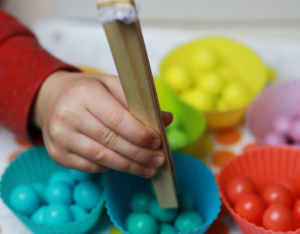
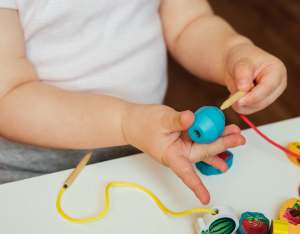
Our therapists also work on the manipulation of small objects — threading beads, building with blocks, turning pages, and managing classroom materials. These skills may seem simple, but they require a complex interplay of muscle strength, coordination, sensory feedback, and motor planning that many children need support to develop fully.
Fine motor therapy benefits children with a wide range of conditions, including developmental delays, cerebral palsy, developmental coordination disorder (DCD), autism spectrum disorder, and any child who struggles with the precise hand movements needed for school and daily life. At Beyond Barriers, we create a supportive, nurturing environment where children build these critical skills through engaging, purposeful activities that feel like play.
Signs Your Child May Need Fine Motor Support
Fine motor challenges can show up in many areas of a child’s daily routine — from the classroom to the dinner table. If you recognize any of these signs in your child, professional guidance can help build their confidence and capability.
✏️
Difficulty Holding Pencils
Your child grips pencils, crayons, or markers awkwardly, uses a fisted grasp past age 3-4, presses too hard or too lightly, or switches hands frequently because neither feels comfortable or natural.
📝
Poor Handwriting
Letters are uneven, poorly formed, or hard to read. Your child struggles with letter spacing, staying on lines, or writing at a pace that keeps up with classroom expectations, leading to frustration and avoidance.
👔
Trouble with Buttons & Zippers
Fastening buttons, pulling zippers, snapping snaps, or managing other clothing fasteners is a major challenge. Your child may resist dressing independently or become upset during self-care routines.
✂️
Difficulty Using Scissors
Struggling to open and close scissors, cut along lines, or coordinate both hands together for cutting tasks. Your child may avoid arts and crafts activities at school because of scissor difficulties.
🎨
Avoiding Drawing & Coloring
Your child actively avoids drawing, coloring, tracing, or other fine motor activities that their peers enjoy. They may say their hands are tired, express frustration, or quickly abandon creative tasks.
🧩
Clumsy with Small Objects
Frequently dropping small items, struggling to pick up tiny objects, difficulty threading beads, building with small blocks, or managing puzzle pieces. These tasks require the precise finger control that fine motor therapy develops.
🍽️
Difficulty Self-Feeding
Struggling to use a spoon, fork, or other utensils independently, making meals messy beyond what is typical for their age. Your child may avoid self-feeding and prefer being fed by a caregiver.
✊
Weak Hand Grip
Noticeable weakness in hand and finger grip strength, difficulty squeezing, twisting, or turning objects like jar lids, door handles, or water bottles. This weakness affects many everyday tasks and school activities.
Our Approach to Fine Motor Therapy
Our occupational therapists and fine motor specialists use trusted, evidence-based methods to help each child develop the hand skills they need for school, play, and daily independence. Every program is uniquely tailored to your child’s strengths and challenges.
Handwriting Without Tears
Therapeutic Activities
Adaptive Equipment
Sensory-Motor Integration
Visual-Motor Training
Targeted Skill Assessment
We begin by pinpointing exactly which fine motor skills need development — from grip strength and finger dexterity to visual-motor coordination — creating a precise roadmap for your child’s progress.
Purposeful Play Activities
We embed fine motor skill-building into creative, playful activities that children genuinely enjoy — from clay sculpting and bead threading to sticker peeling and puzzle building — so therapy feels like an exciting adventure.
Home & School Integration
We work closely with parents, providing guidance, regular feedback, and practical strategies so progress continues at home. We also coordinate with teachers to ensure fine motor goals are reinforced consistently in the classroom environment.
Building Independence Gradually
We progressively increase the complexity of tasks as your child gains confidence and ability. From adaptive tools to independent execution, every step is celebrated and builds toward greater self-reliance in daily life.
What to Expect at Beyond Barriers
We guide families through every step with warmth and transparency. Here is how your child’s fine motor therapy journey unfolds at our center.
1
Family Discussion
We begin with a caring conversation about your child’s daily challenges — from school tasks to self-care routines — and the specific skills you would like to see improve. Your observations as a parent are invaluable.
2
Hands-On Assessment
Our therapist evaluates your child’s hand strength, grasp patterns, finger dexterity, visual-motor skills, and ability to perform age-appropriate fine motor tasks through fun, interactive assessment activities.
3
Custom Therapy Program
We design a personalized plan targeting your child’s specific fine motor goals, including recommended session frequency, therapeutic methods, home activities, and any adaptive tools or equipment that may help.
4
Progress & Celebration
Therapy sessions are filled with encouragement and achievement. We review progress every 6-8 weeks, share detailed updates with parents, and celebrate every new skill your child masters along the way.
Frequently Asked Questions
Here are answers to the questions parents ask us most often about fine motor therapy. If you have additional questions, our team is always happy to talk with you.
At what age should I consider fine motor therapy for my child?
Fine motor skills begin developing in infancy and continue to refine throughout childhood. If you notice that your child is significantly behind their peers in tasks like grasping objects, self-feeding, drawing, or manipulating small toys by ages 2-3, it may be worth consulting with a therapist. Many children are referred for fine motor therapy between ages 3 and 6, when school demands increase, but children of any age can benefit. At Beyond Barriers, we see children from toddlerhood through their school years, and there is no wrong time to seek an evaluation if you have concerns.
How does fine motor therapy differ from occupational therapy?
Fine motor therapy is actually a specialized component within the broader field of occupational therapy (OT). While occupational therapy addresses a wide range of daily living skills — including sensory processing, self-care, play, and social participation — fine motor therapy zeroes in specifically on the small-muscle movements of the hands and fingers. At Beyond Barriers, our occupational therapists provide fine motor therapy as part of a comprehensive approach, often integrating sensory-motor strategies and visual-motor techniques alongside targeted hand skill development for the best possible outcomes.
How long does fine motor therapy typically take?
The duration of therapy depends on your child’s individual challenges, the severity of their fine motor difficulties, and their rate of progress. Some children with mild delays may see significant improvement within 3-6 months, while children with more complex conditions may benefit from longer-term support. Most children attend one to two sessions per week, each lasting 30 to 45 minutes. We set clear, measurable goals from the start and review progress regularly, ensuring that therapy is always moving your child forward. Our aim is always to build lasting skills and confidence, not to create dependency on therapy.
What activities can we do at home to support fine motor development?
There are many enjoyable activities you can incorporate into daily life. Playing with playdough or clay strengthens hand muscles. Stringing beads, sorting small objects, and building with construction toys develop finger dexterity. Encouraging your child to help with cooking tasks like stirring, pouring, and tearing lettuce builds coordination. Coloring, painting, and drawing — even just for fun — are wonderful fine motor practice. Our therapists will provide you with a personalized home activity plan after each session, making it easy to weave practice into your family’s routine without it feeling like extra work.
How do fine motor challenges affect my child’s performance at school?
Fine motor skills are critical for academic success. Children who struggle with handwriting may fall behind in note-taking, completing assignments, and expressing their knowledge on paper. Difficulty with scissors, glue, and other classroom materials can make art projects and hands-on learning activities frustrating. Poor fine motor control may also affect a child’s ability to organize their workspace, manage school supplies, and complete tasks within expected time frames. By strengthening these skills, fine motor therapy helps children participate more fully and confidently in the classroom, reducing frustration and boosting self-esteem alongside academic performance.
Related Services Your Child May Benefit From
Fine motor development is interconnected with many other aspects of your child’s growth. Our multidisciplinary team ensures that all areas are addressed together for the best possible outcomes.
🌀
Sensory Integration Therapy
Many children with fine motor challenges also experience sensory processing differences. Sensory integration therapy helps children better process tactile, proprioceptive, and visual information that directly supports hand skill development.
🧠
Cognitive Therapy
Fine motor tasks require motor planning, sequencing, and problem-solving. Cognitive therapy strengthens these underlying thinking skills, helping children approach complex hand tasks with greater confidence and strategic ability.
🏃
Pediatric Physical Therapy
Strong core and upper body strength provides the stable foundation that fine motor skills depend upon. Physical therapy builds the postural stability and shoulder strength that support precise hand and finger movements.