Early Intervention Program
Helping Your Child Reach Their Full Potential — Starting Early
At Beyond Barriers, our Early Intervention Program is designed for children aged 0 to 6 years who may be showing signs of developmental delays. We believe that the earliest years are the most powerful window of opportunity — and with the right support, every child can shine beyond limits.
Our team of over 40 specialists — including developmental pediatricians, speech-language pathologists, occupational therapists, and child psychologists — work together to create a nurturing, individualized plan for your child’s unique needs.

Understanding Early Intervention
Early intervention refers to a collection of therapeutic services and supports provided to children from birth through age 6 who have, or are at risk for, developmental delays or disabilities.
Why 0–6 Years Is the Critical Window
During the first six years of life, a child’s brain forms over one million new neural connections every second. This incredible period of neuroplasticity means the brain is at its most adaptable and responsive to therapeutic input. Research consistently shows that children who receive early intervention services make significantly greater gains than those who begin therapy later in life. The earlier we start, the more effectively we can shape positive developmental pathways.
Our Evidence-Based Approach
At Beyond Barriers, every strategy we use is grounded in the latest scientific research. Our early intervention program draws from internationally recognized methodologies including Applied Behavior Analysis (ABA), the Denver Model, and DIR/Floortime. We continuously update our practices to align with emerging evidence in child development and neuroscience. Our founder, Shanta Islam, ensures that quality and evidence remain at the heart of every service we offer across our Gulshan, Mirpur, and Chittagong centers.
Neuroplasticity and Your Child
Neuroplasticity is the brain’s remarkable ability to reorganize and form new connections. In young children, this capacity is at its peak. When therapeutic activities are introduced during this critical window, the brain can literally rewire itself to compensate for areas of delay. This means that early intervention does not just help children catch up — it can fundamentally change the trajectory of their development, building stronger foundations for communication, social skills, motor abilities, and learning.
Signs Your Child May Benefit
Every child develops at their own pace. However, if you notice any of the following patterns, it may be helpful to consult with our team. Early identification leads to earlier support — and better outcomes.
Delayed Milestones
Your child is not meeting age-appropriate developmental milestones such as rolling over, sitting up, crawling, or walking within expected timeframes.
Not Responding to Name
By 12 months, most children consistently turn when their name is called. If your child does not respond to their name, this may indicate a need for further evaluation.
Limited Eye Contact
Reduced or inconsistent eye contact can be an early indicator of differences in social communication development that benefit from professional guidance and support.
No Pointing or Gesturing
By 12–14 months, children typically use pointing and gestures to communicate needs and share interests. Absence of these skills may signal a communication delay.
Speech Delays
If your child is not babbling by 9 months, not using single words by 16 months, or not combining two words by 24 months, a speech-language evaluation may be beneficial.
Social Withdrawal
If your child shows little interest in playing with other children, avoids social interactions, or seems to prefer being alone most of the time, early support can help build social skills.
Repetitive Behaviors
Engaging in repetitive movements (such as hand-flapping, rocking, or spinning objects) or showing rigid routines may suggest a need for developmental evaluation and support.
Feeding Difficulties
Persistent challenges with feeding — such as refusing solid foods, gagging, difficulty chewing, or extreme food selectivity — can impact nutrition and development and often respond well to early support.
Our Approach to Early Intervention
We work closely with parents, providing guidance, regular feedback, and practical strategies so progress continues at home. Our approach combines four core pillars that have been proven to deliver the best outcomes for young children.
Play-Based Therapy
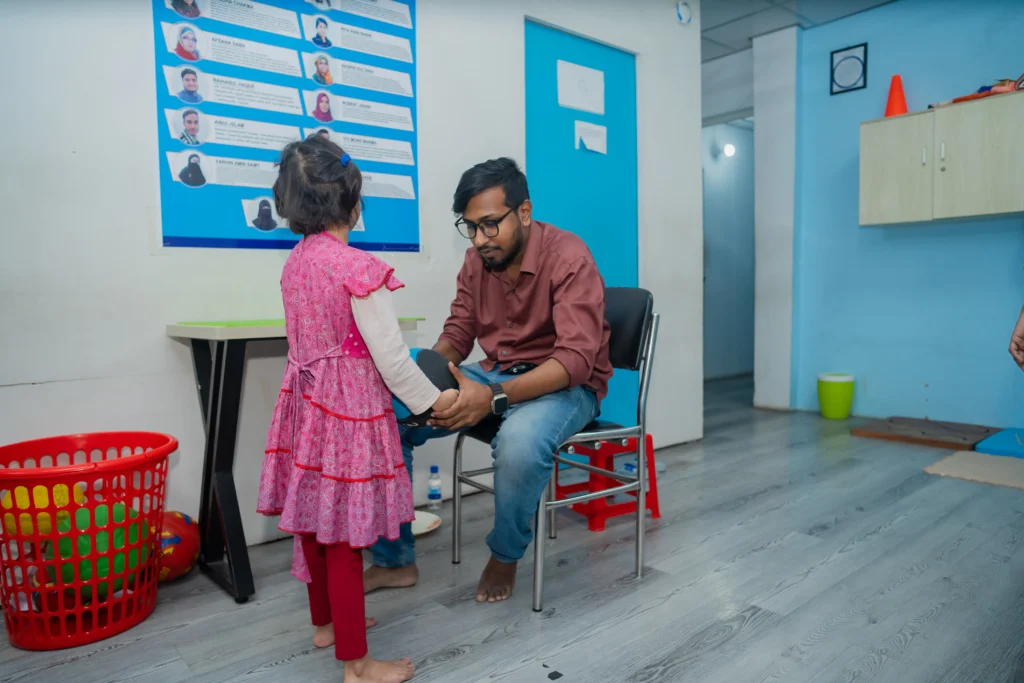
Children learn best through play. Our therapists use structured and natural play activities to target developmental goals — making therapy feel joyful and engaging for your child. Every play session is carefully designed to build skills in communication, motor development, cognition, and social interaction.
Parent Coaching
You are your child’s most important teacher. We empower parents with hands-on coaching, demonstrating techniques you can use throughout the day — during mealtimes, bath time, and play. Our therapists provide regular feedback, written home programs, and video demonstrations to ensure you feel confident supporting your child’s growth at home.
Naturalistic Teaching
We embed learning opportunities into your child’s natural routines and interests. Rather than drilling skills in isolation, our therapists follow your child’s lead and create meaningful learning moments throughout everyday activities. This approach helps children generalize skills across different settings and situations.
Team-Based Care
Your child’s development is multifaceted, and so is our team. Our speech therapists, occupational therapists, physiotherapists, and psychologists collaborate closely — sharing insights and coordinating goals to deliver a unified, comprehensive program. Regular team meetings ensure every aspect of your child’s development is addressed holistically.
What to Expect
Starting therapy can feel overwhelming. Here is a clear, step-by-step guide to what your journey will look like at Beyond Barriers.
1
Free Initial Screening
Contact us for a complimentary 30-minute developmental screening. Our specialist will observe your child, listen to your concerns, and discuss whether a full assessment is recommended. This is a no-pressure, warm conversation to help you understand your child’s current developmental profile.
2
Comprehensive Assessment
Our multidisciplinary team conducts a thorough evaluation of your child’s development across all key areas — communication, motor skills, cognition, social-emotional development, and adaptive behavior. We use standardized tools alongside clinical observation to build a complete picture of your child’s strengths and needs.
3
Personalized Therapy Plan
Based on the assessment results, our team designs a therapy plan tailored specifically to your child. We set measurable goals together with you, select the most effective therapeutic methods, and create a schedule that works for your family. You will receive a written report explaining every recommendation.
4
Ongoing Therapy & Progress Review
Therapy begins with regular sessions at our center and guided home practice. Every 8–12 weeks, we conduct a progress review to celebrate achievements, adjust goals, and refine our approach. We work closely with parents, providing guidance, regular feedback, and practical strategies so progress continues at home.
Frequently Asked Questions
We understand you have many questions. Here are answers to the most common concerns parents share with us.
At what age should I consider early intervention for my child?
Early intervention can begin as early as birth. If you notice any developmental concerns — no matter how small — we encourage you to reach out. Research shows that intervention before age 3 yields the most significant results due to peak brain plasticity. However, children up to age 6 can benefit enormously from our program. There is no wrong time to seek help; the best time is as soon as you have a concern.
How long will my child need early intervention services?
The duration varies based on each child’s unique needs and progress. Some children may show significant improvement within 3–6 months, while others may benefit from ongoing support for 1–2 years or longer. We conduct regular progress reviews every 8–12 weeks to track growth and adjust goals. Our aim is always to help your child become as independent as possible, and we will discuss expected timelines openly with you.
Do I need a doctor’s referral to start early intervention?
No, a doctor’s referral is not required to schedule an initial screening at Beyond Barriers. Parents can contact us directly. However, if your child has been seen by a pediatrician or specialist, bringing any existing medical reports or assessments can help our team better understand your child’s history and design the most effective program.
Will my child be in individual or group sessions?
Most early intervention sessions begin as individual therapy, allowing our therapists to focus entirely on your child’s specific needs. As your child progresses, we may introduce small group sessions to practice social interaction, turn-taking, and peer play in a structured environment. The decision is always based on your child’s readiness and goals, and we will discuss any changes with you in advance.
How can I support my child’s development at home?
Parent involvement is the cornerstone of successful early intervention. After every session, your therapist will share specific activities and strategies you can incorporate into daily routines — such as during play, mealtimes, and bedtime. We also offer parent training workshops, written home programs, and regular progress meetings to ensure you feel supported and empowered to help your child thrive between sessions.
Related Services
Early intervention often works best alongside other specialized therapies. Explore these complementary services available at Beyond Barriers.
Neurodevelopmental Therapy
Specialized therapy for children with neurological conditions, focusing on improving movement patterns, posture, and balance through the Bobath approach.
Oromotor Therapy
Targeting the muscles of the mouth, face, and jaw to address feeding challenges, drooling, and speech clarity issues in young children.
Cognitive Therapy
Strengthening attention, memory, problem-solving, and executive function skills to prepare your child for academic success and daily independence.