Oromotor Therapy
Strengthening the Foundation for Feeding & Speech
At Beyond Barriers, our Oromotor Therapy program helps children who face challenges with feeding, swallowing, drooling, and speech clarity. By targeting the muscles of the mouth, face, and jaw, our specialized therapists work to improve your child’s oral motor skills — building the physical foundation needed for healthy eating and clear communication.
Our team includes speech-language pathologists and occupational therapists with advanced training in feeding therapy and oral motor intervention. With over 40 specialists across our Gulshan, Mirpur, and Chittagong centers, we are equipped to provide your child with the expert, compassionate care they deserve.
Understanding Oromotor Therapy
Oromotor therapy is a specialized intervention that focuses on improving the strength, coordination, and range of motion of the muscles used for eating, drinking, and speaking.
What Is Oromotor Therapy?
Oromotor therapy targets the muscles and structures involved in oral function — including the lips, tongue, jaw, cheeks, and soft palate. These muscles work together in complex, coordinated patterns every time your child eats, drinks, or speaks. When any of these muscles are weak, uncoordinated, or hypersensitive, it can lead to significant challenges with feeding, speech clarity, and even breathing. Our therapists use gentle, systematic exercises and sensory-based techniques to help these muscles work more effectively, building the foundation for confident eating and clear communication.
Who Benefits from Oromotor Therapy?
Oromotor therapy is beneficial for children experiencing a wide range of oral motor challenges. This includes children with feeding difficulties such as picky eating, food refusal, gagging, or difficulty transitioning to solid foods. It also helps children who drool excessively beyond the typical age, those with an open mouth posture or mouth breathing habit, and children whose speech is difficult to understand due to weak or uncoordinated oral muscles. Children with conditions such as cerebral palsy, Down syndrome, cleft palate, and autism spectrum disorder frequently benefit from oromotor intervention.
The Connection Between Feeding & Speech
Many parents are surprised to learn that feeding and speech share the same muscles and motor patterns. The tongue, lips, and jaw movements used for chewing and swallowing are the same muscles required for producing clear speech sounds. This is why children with feeding difficulties often also show delays in speech development. By strengthening these shared oral motor pathways, oromotor therapy creates positive cascading effects — improving both feeding and speech simultaneously. Under the guidance of Shanta Islam, our team ensures each child receives a holistic program addressing all aspects of oral function.
Signs Your Child May Benefit
Mealtimes should be enjoyable, not stressful. If your child is experiencing any of the following challenges, our oromotor therapy team can help.
Excessive Drooling
While drooling is normal in infants, persistent drooling beyond age 2 may indicate low muscle tone in the lips and jaw, reduced oral awareness, or difficulty managing saliva — all of which respond well to oromotor intervention.
Difficulty Chewing
If your child struggles to chew food properly, swallows food in large pieces, or avoids foods that require significant chewing, this may indicate weakness or incoordination of the jaw muscles that can be addressed through therapy.
Gagging on Textures
Frequent gagging when encountering new food textures — particularly lumpy, crunchy, or mixed-consistency foods — can indicate oral sensory sensitivity that benefits from a gradual, sensory-based desensitization approach.
Messy Eating
If your child consistently loses food from their mouth while eating, has difficulty keeping food on a spoon, or is significantly messier than peers of the same age, this may indicate reduced lip closure and tongue control that therapy can improve.
Open Mouth Posture
A habitually open mouth — often accompanied by mouth breathing — can affect facial development, dental alignment, and speech production. Oromotor therapy addresses the underlying muscle weakness and helps establish proper lip seal and nasal breathing patterns.
Poor Lip Closure
Difficulty closing the lips fully around a spoon, keeping the lips together when swallowing, or maintaining lip seal during speech can all indicate reduced lip strength and coordination that respond well to targeted oral motor exercises.
Difficulty with Cup or Straw
Transitioning from bottle to cup or learning to use a straw requires coordinated movements of the lips, tongue, and jaw. If your child struggles with these transitions or frequently spills liquids while drinking, oromotor therapy can help.
Speech Sound Errors
If your child’s speech is difficult to understand, they substitute sounds frequently, or struggle with specific sounds that require precise tongue or lip placement, the underlying cause may be oral motor weakness rather than a language delay alone.
Our Approach to Oromotor Therapy
We work closely with parents, providing guidance, regular feedback, and practical strategies so progress continues at home. Our oromotor therapy program combines four specialized methodologies to address your child’s unique feeding and speech needs.
Oral Motor Exercises
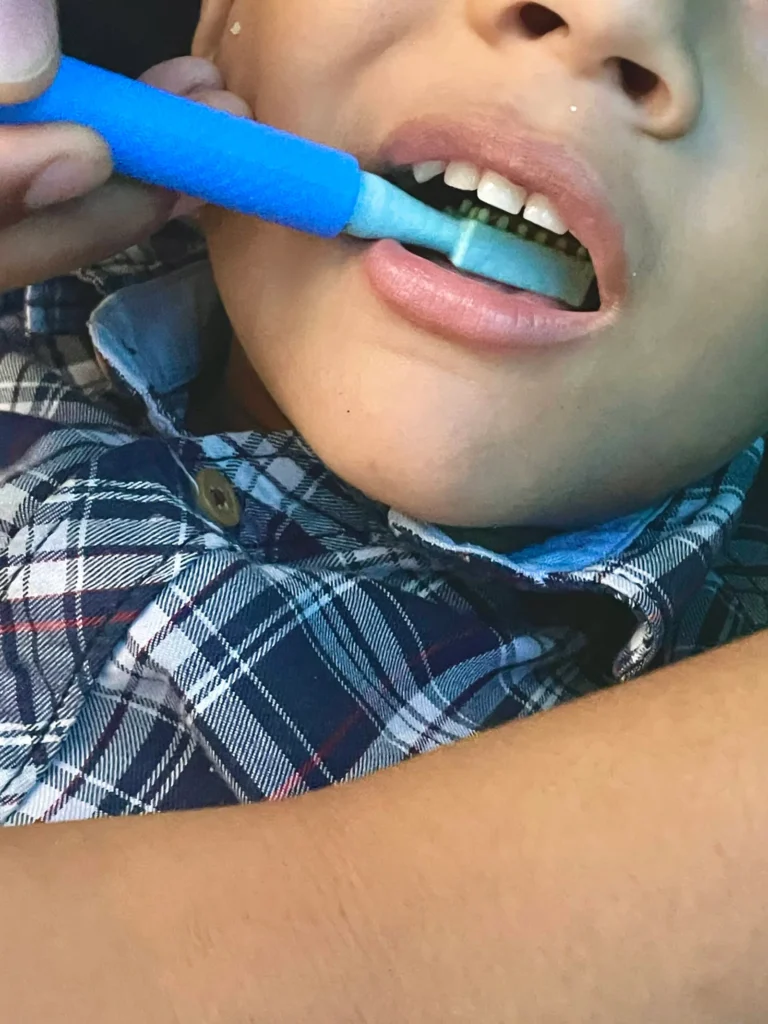
Our therapists use targeted exercises to strengthen and improve the coordination of the lips, tongue, jaw, and cheeks. These exercises are carefully selected based on your child’s specific areas of weakness and are designed to be engaging and age-appropriate — often incorporated into playful activities that keep your child motivated and happy during sessions.
Sensory-Based Feeding Therapy
For children with sensory sensitivities around food, we use a gentle, gradual approach to help them become comfortable with new textures, tastes, temperatures, and smells. Using the SOS (Sequential Oral Sensory) approach and other evidence-based feeding frameworks, we help your child move through a hierarchy of food exploration — from tolerating food nearby, to touching, smelling, tasting, and eventually eating new foods with confidence.
PROMPT Technique
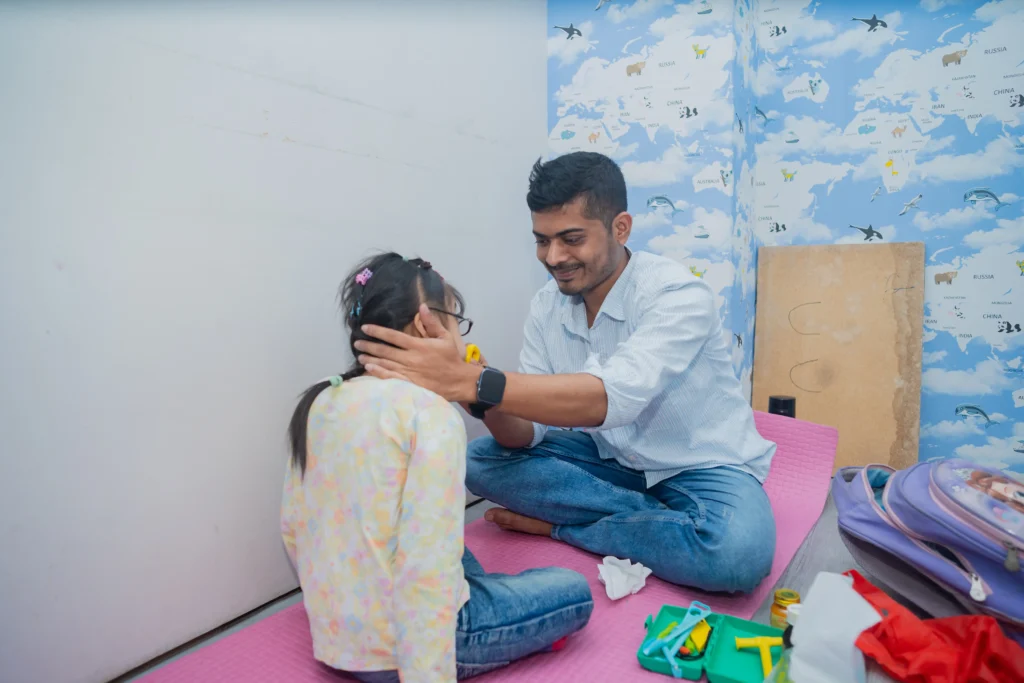
PROMPT (Prompts for Restructuring Oral Muscular Phonetic Targets) is a specialized tactile-kinesthetic approach to speech therapy. Our PROMPT-trained therapists use gentle touch cues on your child’s face and jaw to guide the precise movements needed for clear speech production. This hands-on method is particularly effective for children whose speech difficulties stem from motor planning and coordination challenges.
Myofunctional Therapy
Myofunctional therapy targets the resting posture and function of the oral and facial muscles. This approach addresses habits such as mouth breathing, tongue thrust, and prolonged thumb sucking that can affect dental development, facial growth, and speech production. Through structured exercises and habit modification, we help establish healthy oral resting posture and functional swallowing patterns.
What to Expect
We understand that feeding challenges and speech concerns can be stressful for families. Here is a clear roadmap of your journey with our oromotor therapy team.
1
Initial Feeding & Speech Screening
Your journey begins with a complimentary screening where our therapist observes your child’s oral motor function, discusses your concerns about feeding or speech, and reviews your child’s medical and developmental history. This warm, no-pressure conversation helps us understand your family’s priorities and determine if a comprehensive assessment is needed.
2
Oral Motor & Feeding Assessment
Our specialist conducts a thorough evaluation of your child’s oral structures, muscle tone, movement patterns of the lips, tongue and jaw, sensory responses to different food textures, and current feeding abilities. For children with speech concerns, we also assess oral motor function as it relates to speech sound production. We often ask parents to bring familiar foods to observe natural mealtime behaviors.
3
Customized Therapy Plan
Based on assessment results, we create a personalized therapy plan addressing your child’s specific oral motor needs. Goals might include improving lip closure for eating, reducing drooling, expanding accepted food textures, or improving speech clarity. We discuss every recommendation with you, select the best therapeutic methods, and design a mealtime strategy for home.
4
Therapy Sessions & Mealtime Coaching
Regular sessions combine oral motor exercises, sensory exploration, and practical mealtime practice. We work closely with parents, providing guidance, regular feedback, and practical strategies so progress continues at home. Every 8–12 weeks, we review progress, celebrate new foods your child is accepting, and adjust the plan as your child grows and develops.
Frequently Asked Questions
Feeding and speech challenges can raise many questions. Here are answers to the concerns parents share with us most often.
My child is a very picky eater. Is this just a phase or should I be concerned?
Some degree of food selectivity is normal in young children. However, if your child consistently accepts fewer than 20 foods, gags or vomits at the sight or smell of certain foods, refuses entire food groups, or becomes extremely distressed at mealtimes, it may indicate an underlying oral motor or sensory issue that benefits from professional support. Our team can help distinguish between typical pickiness and feeding challenges that require intervention.
How long does oromotor therapy typically take to show results?
Many families notice initial improvements within the first 4–6 weeks, such as reduced drooling, better lip closure, or willingness to explore new foods. More significant changes in feeding variety and speech clarity typically develop over 3–6 months of consistent therapy and home practice. The timeline depends on the severity of your child’s challenges, the consistency of home activities, and each child’s individual pace of progress.
Will my child be forced to eat foods they do not want?
Absolutely not. Our approach to feeding therapy is always gentle, respectful, and child-led. We never force a child to eat or put food in their mouth without their consent. Instead, we use a gradual, systematic approach that allows your child to build comfort and confidence with new foods at their own pace. By creating positive mealtime experiences, children naturally become more willing to explore and accept new textures and flavors.
Can oromotor therapy help my child who drools a lot?
Yes, drooling management is one of the core focus areas of oromotor therapy. Excessive drooling often results from reduced oral awareness, weak lip closure, or an open mouth posture. Our therapists use a combination of oral motor strengthening exercises, sensory awareness training, and posture correction to help your child develop better saliva control. We also teach families practical strategies to reinforce these skills throughout the day.
What can I do at home to support my child’s oral motor development?
Home practice is essential for lasting progress. After each session, your therapist will provide specific activities tailored to your child’s current goals. These might include blowing games to strengthen lip muscles, chewy snacks to build jaw strength, straw drinking to improve lip seal, or sensory play with food textures. We also provide guidance on mealtime positioning, utensil selection, and creating a positive mealtime environment to support your child’s growth between sessions.
Related Services
Children receiving oromotor therapy often benefit from these complementary services at Beyond Barriers.
Early Intervention Program
Comprehensive support for children aged 0–6 showing developmental delays, combining play-based therapy with parent coaching and multidisciplinary team care.
Neurodevelopmental Therapy
Specialized Bobath-based therapy for children with neurological conditions, improving movement patterns, posture, balance, and physical independence.
Cognitive Therapy
Building attention, memory, problem-solving, and executive function skills to support academic readiness and confidence in daily activities.