Comprehensive Developmental Assessments
When you want a complete picture of your child’s development — across all areas — our comprehensive assessment provides the answers. From cognitive abilities to social skills, motor development to adaptive behaviour, we evaluate every domain so you understand exactly where your child is and where they can go.
✓ All 5 developmental domains
✓ Multidisciplinary team
✓ Reports in English & Bangla
Understanding Development
The Five Domains of Child Development
Child development is not a single path — it unfolds across five interconnected domains. When a child struggles in one area, it often impacts others. Our comprehensive assessment evaluates all five domains to create a complete developmental profile:
Cognitive Development — Thinking, problem-solving, memory, and the ability to learn new concepts and apply knowledge.
Communication — Understanding language (receptive) and using language to express needs, ideas, and feelings (expressive).
Motor Development — Gross motor skills (walking, running, climbing) and fine motor skills (drawing, buttoning, writing).
Social-Emotional — Building relationships, understanding emotions, managing behaviour, and developing self-awareness and empathy.
Adaptive/Self-Help — Daily living skills including feeding, dressing, toileting, and age-appropriate independence in routine activities.
Signs to Watch For
Children develop at their own pace, but consistent patterns of delay across multiple areas may indicate the need for a comprehensive developmental assessment.
📅 Missing Multiple Milestones
Your child is behind in two or more developmental areas — for example, both walking and talking are significantly delayed for their age.
🔙 Loss of Previously Acquired Skills
Your child could do things they can no longer do — such as speaking words they have stopped using, or skills that seem to be regressing.
👫 Difficulty Interacting with Peers
Your child struggles to play with children their own age, seems much younger in their social behaviour, or is consistently left out of group activities.
🎒 Struggling with Preschool/School Readiness
Your child’s preschool or school has raised concerns about their readiness, ability to keep up, or behaviour in the classroom environment.
🍽️ Delayed Self-Help Skills
Difficulty with age-appropriate self-care tasks — feeding themselves, dressing, toileting, or managing basic daily routines that peers handle independently.
🧩 Difficulty with Problem-Solving
Struggles with age-appropriate puzzles, games, or tasks that require thinking, planning, or figuring out how things work compared to same-age children.
😢 Behavioural or Emotional Concerns
Frequent tantrums beyond toddlerhood, extreme shyness, aggression, difficulty separating from parents, or emotional reactions that seem out of proportion.
⚕️ Medical History Risk Factors
Premature birth, low birth weight, birth complications, or a family history of developmental conditions — these warrant monitoring and early assessment.
Our Assessment Approach
Internationally Standardised Developmental Tools
We use a suite of gold-standard developmental assessment tools, selected based on your child’s age and presenting concerns.
Bayley-4
The Bayley Scales of Infant and Toddler Development (4th Edition) is the most widely used tool for assessing cognitive, language, and motor development in children from 1 to 42 months.
Griffiths III
The Griffiths Scales of Child Development assesses five key areas — foundations of learning, language, eye-hand coordination, personal-social-emotional, and gross motor — for children birth to 6 years.
ASQ-3
The Ages and Stages Questionnaire is a parent-completed screening tool that quickly identifies areas needing further evaluation across communication, motor, problem-solving, and personal-social domains.
Vineland-3
The Vineland Adaptive Behavior Scales assess how your child manages everyday activities — communication, daily living skills, socialisation, and motor skills — providing a practical picture of functional abilities.
Denver II
The Denver Developmental Screening Test is a quick yet comprehensive screening tool that evaluates four domains — personal-social, fine motor-adaptive, language, and gross motor — for children from birth to age 6.
What to Expect
Our developmental assessment is designed to be a positive experience for both your child and your family. Here is what the process looks like.
1
Developmental History
An in-depth parent interview covering pregnancy, birth, early milestones, medical history, family dynamics, and current concerns. We want to understand your child’s complete story and your family’s daily life.
2
Multidomain Assessment
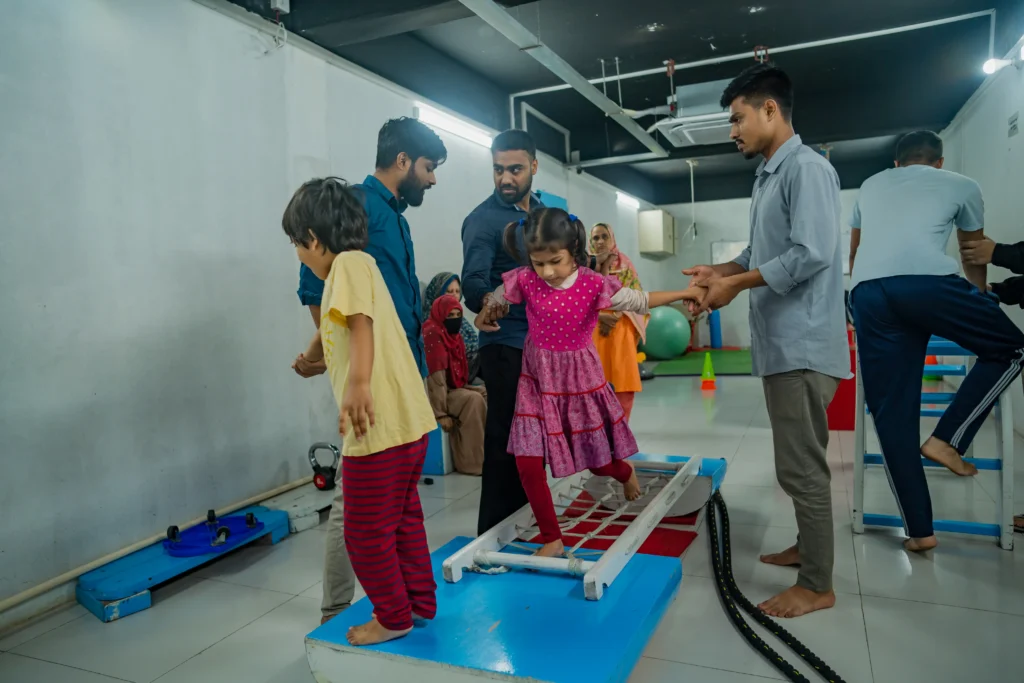
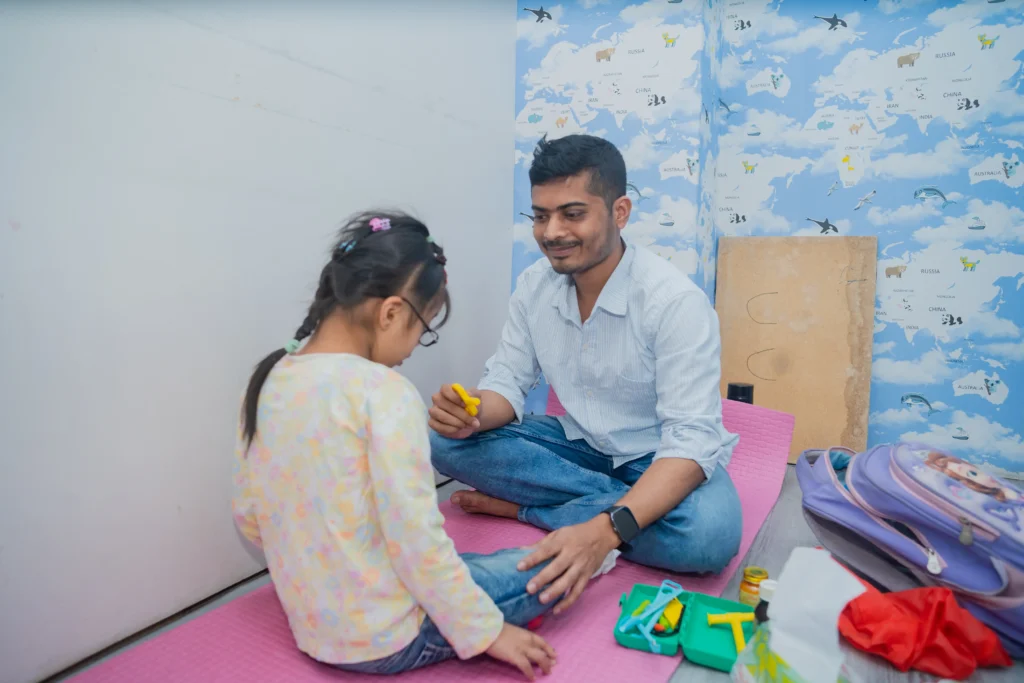
Our team evaluates all five developmental domains through play-based activities, structured tasks, and observation. Multiple specialists may be involved depending on your child’s needs — psychologists, therapists, and developmental paediatricians.
3
Comprehensive Report
Your detailed report maps strengths and challenges across all domains. Written in clear, parent-friendly language in both English and Bangla, it includes visual charts, specific recommendations, and a prioritised action plan.
4
Intervention Roadmap
We create a personalised intervention roadmap — connecting your family with the right therapies, school support, and community resources across our Gulshan, Mirpur, and Chittagong centres. Your child’s journey is supported every step of the way.
Frequently Asked Questions
When should I consider a developmental assessment?
Any time you have a persistent concern about your child’s development is the right time. Common prompts include delayed milestones, concerns raised by family or teachers, a known medical condition, or simply a parent’s intuition that something is different. Trust your instincts — parents know their children best.
How is this different from an ASD or ADHD assessment?
A developmental assessment provides a broad picture across all developmental domains, while ASD and ADHD assessments focus specifically on those conditions. Often, a comprehensive developmental assessment is the ideal starting point when families are unsure where the difficulty lies, and it may lead to more targeted assessments if needed.
What ages do you assess?
We assess children from birth through to adolescence. Our tool selection varies by age — Bayley-4 and ASQ-3 for infants and toddlers, Griffiths III for preschoolers, and a combination of cognitive and adaptive measures for school-age children. The right tools for the right age ensure accurate results.
Will we get a diagnosis from the assessment?
Our developmental assessment may lead to a specific diagnosis (such as Global Developmental Delay, Intellectual Disability, or a specific condition), or it may identify areas of delay that need support without a specific diagnostic label. Either way, you will receive clear, actionable recommendations for your child’s next steps.
Can I bring previous reports from other centres?
Absolutely — please bring any previous medical reports, developmental assessments, school reports, or therapy summaries. This information helps our team build on existing knowledge rather than starting from scratch, and ensures continuity in your child’s care journey.
Related Services
Based on your child’s developmental profile, these specialised services may provide targeted support.
🧩
ASD Screening
If our developmental assessment raises concerns about social communication patterns, a targeted ASD screening can provide specific diagnostic clarity and intervention guidance.
🏃
Cerebral Palsy Assessment
When motor development is the primary concern, our specialised CP assessment provides detailed classification and a targeted physiotherapy and occupational therapy plan.
⚡
ADHD Evaluation
If attention, hyperactivity, or executive function challenges emerge during the developmental assessment, a focused ADHD evaluation can provide targeted diagnostic and behavioural support.