Our Services → Cerebral Palsy
Cerebral Palsy Assessment & Support
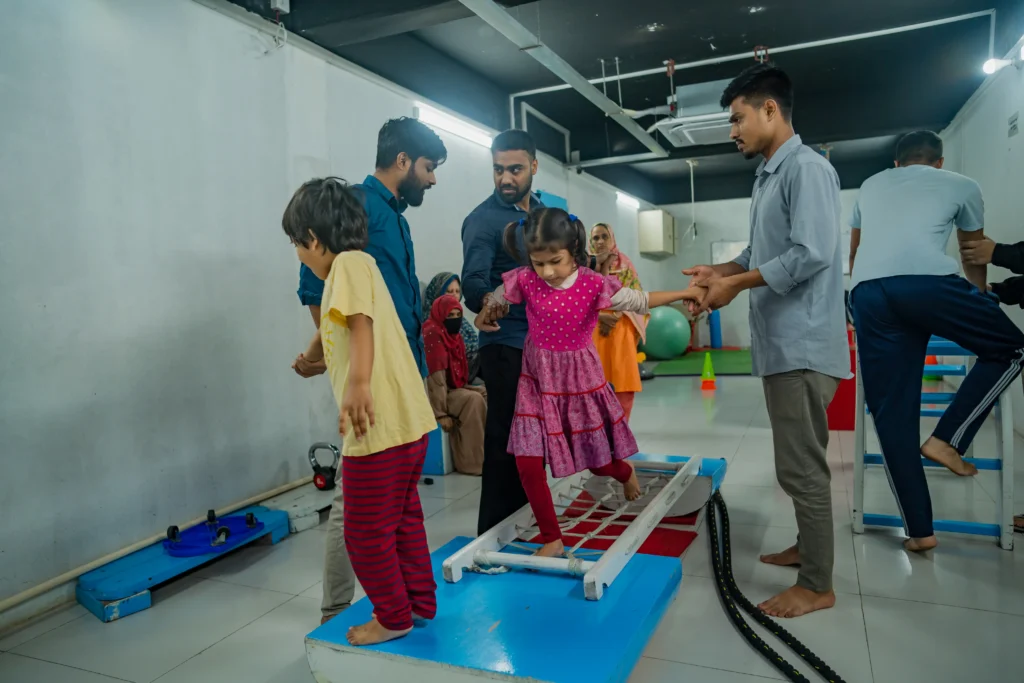
Cerebral palsy affects each child differently. At Beyond Barriers, our team of physiotherapists, occupational therapists, and developmental paediatricians work together to understand your child’s unique movement profile and build a support plan that empowers their fullest potential.
✓ Multidisciplinary CP team
✓ GMFCS classification expertise
✓ Family-centred therapy approach
Understanding Cerebral Palsy
What is Cerebral Palsy?
Cerebral palsy (CP) is a group of neurological conditions that affect movement, posture, and muscle coordination. It results from brain differences that occur before, during, or shortly after birth. CP is one of the most common motor disabilities in childhood, and in Bangladesh, many families seek support to help their children reach their full movement potential.
There are several types of cerebral palsy, and understanding your child’s specific type is essential for effective support:
Spastic CP — The most common type (~80%), characterised by stiff muscles and awkward movements. May affect one side (hemiplegia), legs (diplegia), or all limbs (quadriplegia).
Dyskinetic CP — Involves involuntary movements, fluctuating muscle tone, and difficulty controlling hands, arms, feet, and legs during purposeful activity.
Ataxic CP — Affects balance, depth perception, and coordination. Children may appear shaky and have difficulty with precise movements like writing.
Mixed CP — A combination of types, most commonly spastic-dyskinetic, requiring a comprehensive and individualised therapy approach.
Signs to Watch For
Early recognition of motor development differences can lead to earlier intervention and better outcomes. If you notice several of these signs, please consult with our team.
👶 Delayed Motor Milestones
Not sitting by 8 months, not crawling by 12 months, or not walking by 18 months — later than expected for their age.
💪 Unusual Muscle Tone
Muscles may feel very stiff (hypertonia) or very floppy (hypotonia). You may notice your baby feels unusually rigid or limp when picked up.
✋ Hand Preference Before 12 Months
Strongly favouring one hand very early may suggest weakness or difficulty controlling the other side of the body.
🚶 Asymmetric Movement
One side of the body moves differently from the other — for example, dragging one leg while crawling or holding one arm in an unusual position.
🍼 Feeding Difficulties
Trouble sucking, swallowing, or chewing, which may lead to slow feeding, choking episodes, or poor weight gain in infancy.
🔄 Persistent Reflexes
Primitive reflexes that should disappear in the first few months of life (such as the Moro reflex) continue beyond the expected age.
✊ Difficulty with Fine Motor Skills
Struggles to grasp toys, pick up small objects, or use utensils. Movements appear jerky, uncoordinated, or require great effort.
⚖️ Balance and Posture Challenges
Difficulty sitting upright without support, poor head control beyond the expected age, or an unusual standing or walking posture.
Our Assessment Approach
Comprehensive Motor Assessment
Our CP assessment uses standardised classification systems and developmental scales to understand your child’s functional abilities and create targeted intervention plans.
GMFCS
The Gross Motor Function Classification System classifies your child’s movement abilities across five levels, from independent walking to wheelchair mobility, guiding realistic and hopeful goal-setting.
MACS
The Manual Ability Classification System evaluates how your child uses their hands in daily activities — from self-feeding to playing — helping us target occupational therapy goals effectively.
Bayley Scales
The Bayley Scales of Infant and Toddler Development assess cognitive, language, and motor development alongside the CP evaluation, giving a holistic view of your child’s abilities.
What to Expect
Our CP assessment is gentle, thorough, and always centred on your child’s comfort and your family’s needs.
1
Family Consultation
We begin with a detailed conversation about your child’s birth history, developmental milestones, medical background, and your family’s daily routines and concerns. Bring any previous medical reports.
2
Physical & Functional Assessment
Our physiotherapist and occupational therapist assess muscle tone, reflexes, range of motion, gross and fine motor skills, and functional abilities using GMFCS, MACS, and Bayley Scales.
3
Team Discussion & Report
Our multidisciplinary team — including physiotherapists, OTs, and developmental specialists — meets to review findings. Your detailed report is prepared in English and Bangla with clear, practical recommendations.
4
Therapy & Family Training
We create a personalised therapy plan and train your family in home exercises, positioning techniques, and daily strategies. In Bangladesh, family involvement is the cornerstone of effective CP management.
Frequently Asked Questions
At what age can cerebral palsy be diagnosed?
CP can often be identified between 12 and 24 months of age, though in some cases it may be diagnosed earlier if risk factors are present (such as premature birth or birth complications). The earlier we begin therapy, the more we can support your child’s motor development during critical growth periods.
Can children with CP attend regular school in Bangladesh?
Many children with CP can and do attend mainstream schools in Bangladesh with appropriate support. Our team helps families navigate school readiness, accommodations, and assistive devices. We also provide letters and guidance for schools to ensure your child receives the support they need in the classroom.
How often will my child need therapy sessions?
Therapy frequency depends on your child’s specific needs and GMFCS level. Most families start with 2–3 sessions per week, combining physiotherapy and occupational therapy. As your child progresses, we adjust the schedule. We also train families in home exercises so therapy continues between visits.
Does cerebral palsy affect intelligence?
CP is primarily a motor condition. Many children with CP have typical or above-typical intelligence. Some children may have co-occurring learning differences, which is why our assessment includes cognitive screening alongside motor evaluation, ensuring we support the whole child.
Do you provide assistive devices and equipment?
Yes, our occupational therapists can recommend and help source appropriate assistive devices — from adapted seating to communication aids. We work with families to find solutions that are practical and accessible within Bangladesh, and we help with fitting and training on all equipment.
Related Services
Children with cerebral palsy often benefit from a range of complementary services to support their overall development.
🗣️
Speech & Language Therapy
Many children with CP experience speech and swallowing difficulties. Our speech therapists work on oral motor skills, communication strategies, and augmentative communication when needed.
📊
Developmental Assessments
A comprehensive developmental assessment provides a complete picture of your child’s cognitive, social, and adaptive skills alongside their motor profile.
📚
Learning Support
For children with CP who need additional academic support, our educational specialists help identify learning strategies and accommodations for school success.