Cognitive Therapy
Empowering Young Minds to Think, Learn & Grow
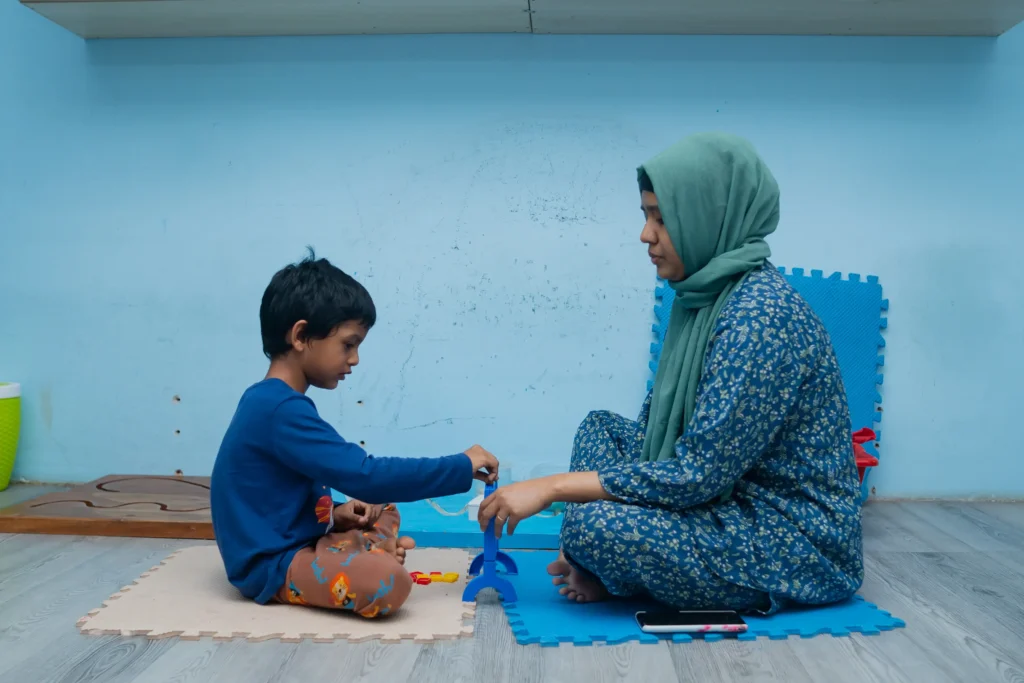
At Beyond Barriers, our Cognitive Therapy program is designed for children who need support with attention, memory, problem-solving, executive function, and academic readiness. We help children develop the thinking skills they need to learn confidently, navigate daily routines, and reach their full potential in school and beyond.

Understanding Cognitive Therapy for Children
Cognitive therapy for children focuses on strengthening the core thinking skills that underpin learning, behavior, and daily functioning — including attention, memory, reasoning, planning, and problem-solving.
What Is Cognitive Therapy?
Cognitive therapy for children is a structured intervention that targets the thinking processes essential for learning and everyday life. Unlike tutoring, which focuses on specific academic content, cognitive therapy addresses the underlying mental skills — such as sustained attention, working memory, cognitive flexibility, and processing speed — that make learning possible in the first place. When these foundational skills are strengthened, children become more effective learners across all areas of their lives, from the classroom to the playground to home routines.
Executive Function & Academic Readiness
Executive function is often described as the brain’s management system — the set of skills that allows us to plan, organize, manage time, pay attention, switch focus, and regulate emotions. For children, strong executive function is one of the most reliable predictors of academic success and social competence. Our cognitive therapy program systematically strengthens these skills, helping your child become a more organized, focused, and independent learner who is well prepared for the demands of school and daily life.
Attention, Memory & Problem-Solving
Attention allows a child to focus on what matters; memory lets them hold and use information; problem-solving helps them navigate challenges. These three interconnected skills form the cognitive backbone of learning. When any of these areas is underdeveloped, it can appear as forgetfulness, difficulty following multi-step instructions, inability to complete tasks, or frustration during learning activities. Our therapists use evidence-based techniques to strengthen each of these domains, building your child’s capacity to learn, retain, and apply knowledge with confidence and independence.
Signs Your Child May Benefit
Cognitive challenges can show up in many ways. If you notice any of the following patterns in your child, our cognitive therapy team can evaluate their thinking skills and create a plan to help them thrive.
Short Attention Span
If your child has significant difficulty staying focused on tasks, is easily distracted by minor stimuli, or cannot maintain attention during age-appropriate activities like storytime, puzzles, or classroom work, they may benefit from attention training strategies.
Difficulty Following Instructions
Children who consistently struggle to follow multi-step directions — forgetting what they were asked to do midway through, or needing instructions repeated several times — may have challenges with working memory or auditory processing that cognitive therapy can address.
Poor Memory
If your child frequently forgets recently learned information, struggles to remember daily routines, or has difficulty recalling what they read or heard moments ago, these may indicate weaknesses in working memory or long-term memory retrieval that respond well to targeted strategies.
Trouble Problem-Solving
When your child becomes easily frustrated with puzzles, games, or novel challenges — giving up quickly rather than trying different approaches — this may indicate difficulty with cognitive flexibility and reasoning skills that can be developed through guided practice.
Difficulty with Planning
Struggling to organize tasks, plan ahead for activities, or break larger projects into manageable steps can indicate challenges with executive function. These planning skills are critical for school success and daily independence.
Slow Processing Speed
If your child takes significantly longer than peers to complete tasks, seems to think or respond slowly, or struggles to keep up with the pace of classroom instruction, they may have a slower processing speed that can be supported through cognitive training and compensatory strategies.
Trouble with Abstract Thinking
Difficulty understanding concepts that are not concrete — such as time, categories, cause and effect, or inferencing — may indicate delays in higher-order thinking skills. These abilities become increasingly important as academic demands grow with age.
Academic Struggles
Persistent difficulties with reading comprehension, math reasoning, writing organization, or overall school performance — despite adequate effort and support — may indicate underlying cognitive skill weaknesses that need targeted intervention beyond traditional tutoring.
Our Approach to Cognitive Therapy
We work closely with parents, providing guidance, regular feedback, and practical strategies so progress continues at home. Our cognitive therapy program draws on four proven methodologies to build your child’s thinking skills from the ground up.
Cognitive Rehabilitation
We use structured, progressive activities to rebuild and strengthen core cognitive skills. Starting from your child’s current level, our therapists design increasingly challenging tasks that train the brain to process information more efficiently. Sessions include tabletop activities, technology-assisted exercises, and real-world problem-solving tasks — all carefully calibrated to your child’s unique cognitive profile and learning style.
Attention Training
Attention is the gateway to all learning. Our attention training program systematically improves your child’s ability to sustain focus, divide attention between tasks, shift attention when needed, and filter out distractions. We use engaging, game-like activities that make attention training enjoyable while building the neural pathways needed for improved concentration in the classroom and daily life.
Memory Strategies
We teach children practical, evidence-based memory techniques — including visualization, chunking, association, and rehearsal strategies — that help them encode, store, and retrieve information more effectively. These strategies become lifelong tools that children carry with them through school and beyond. Our therapists also work with parents and teachers to embed memory supports into daily routines and homework practices.
Executive Function Coaching
Our executive function coaching program teaches children to plan, organize, prioritize, manage time, and self-monitor their own performance. Through structured activities and real-world practice, children learn to break tasks into steps, use visual schedules and checklists, self-check their work, and develop the self-regulation skills needed for academic success and daily independence. We equip both children and parents with tools that build lasting organizational habits.
What to Expect
Beginning cognitive therapy is an important step toward helping your child build the thinking skills they need. Here is a clear picture of what your journey at Beyond Barriers will look like.
1
Initial Cognitive Screening
We start with a complimentary screening where our specialist observes your child’s attention, memory, and problem-solving abilities through engaging activities. We listen carefully to your concerns about learning, behavior, or school performance, and discuss whether a comprehensive cognitive assessment is recommended. This is a warm, no-pressure conversation designed to help you understand your child’s cognitive profile.
2
Comprehensive Cognitive Assessment
Our psychologist or educational therapist conducts a detailed evaluation of your child’s cognitive abilities — including attention (sustained, selective, and divided), working memory, processing speed, executive function, reasoning, and problem-solving. We use internationally recognized standardized assessment tools alongside clinical observation to build a comprehensive picture of your child’s cognitive strengths and areas for growth.
3
Personalized Cognitive Training Plan
Based on assessment results, our team designs a therapy plan targeting your child’s specific cognitive needs. We set measurable goals — such as improving sustained attention for 15 minutes, following 3-step instructions independently, or completing homework with minimal reminders — and create a structured program combining in-center therapy with home-based cognitive activities.
4
Ongoing Therapy & Academic Support
Regular therapy sessions combine structured cognitive exercises with real-world application practice. Every 8–12 weeks, we conduct a progress review using both formal measures and your observations at home and school. We work closely with parents, providing guidance, regular feedback, and practical strategies so progress continues at home. When appropriate, we coordinate with your child’s school to ensure consistent support.
Frequently Asked Questions
Here are answers to the questions parents most commonly ask about cognitive therapy for children.
How is cognitive therapy different from tutoring?
Tutoring focuses on teaching specific academic content — such as math facts, reading strategies, or science concepts. Cognitive therapy, on the other hand, targets the underlying thinking skills that make learning possible: attention, memory, processing speed, reasoning, and executive function. Think of it this way: tutoring teaches what to learn, while cognitive therapy strengthens how your child learns. Children who receive cognitive therapy often show improvement across all academic areas because the foundational skills they develop apply universally.
At what age can cognitive therapy begin?
We offer cognitive support for children as young as 3 years old, adapting our methods to be developmentally appropriate for each age group. For younger children (ages 3–5), cognitive therapy is heavily play-based, focusing on foundational skills like sustained attention, following directions, turn-taking, and basic problem-solving through games and interactive activities. For school-age children, sessions become more structured, targeting academic-related skills such as working memory, organization, and independent learning strategies.
Does my child need a diagnosis to receive cognitive therapy?
No, a formal diagnosis is not required. While cognitive therapy is commonly recommended for children with ADHD, learning disabilities, autism spectrum disorder, or intellectual disability, any child who is struggling with attention, memory, organization, or academic performance can benefit. Our comprehensive assessment will identify your child’s specific cognitive strengths and weaknesses, allowing us to design a targeted program regardless of whether a formal diagnosis exists.
How long before I see improvements in my child’s thinking skills?
Many parents report noticing improvements in their child’s focus and organization within the first 6–8 weeks of consistent therapy and home practice. More substantial changes — such as improved academic performance, greater independence with homework, and better self-regulation — typically develop over 3–6 months. The timeline varies based on the nature and severity of your child’s cognitive challenges, the consistency of therapy attendance, and how actively strategies are used at home and school.
Can you work with my child’s school to support their learning?
Yes, school collaboration is an important part of our approach. With your permission, we can communicate directly with your child’s teachers to share strategies, recommend classroom accommodations, and ensure consistency between our therapy program and the school environment. We also provide written reports and recommendations that can be shared with your child’s school to support their learning plan. Our goal is to create a unified support system around your child.
Related Services
Children receiving cognitive therapy often benefit from these complementary services at Beyond Barriers.
Early Intervention Program
Comprehensive early support for children aged 0–6 with developmental delays, combining play-based therapy, parent coaching, and holistic multidisciplinary care.
Neurodevelopmental Therapy
Specialized Bobath-based therapy for children with neurological conditions, improving movement patterns, posture, balance, and physical confidence.
Oromotor Therapy
Targeting the muscles of the mouth, face, and jaw to improve feeding, reduce drooling, and enhance speech clarity through specialized therapeutic techniques.